There are very few cultural texts that enjoy universal
admiration or receive unambiguous and univocal acclaim from a heterogeneous
society; Dr. Martin Luther King, Jr. might be one such text.
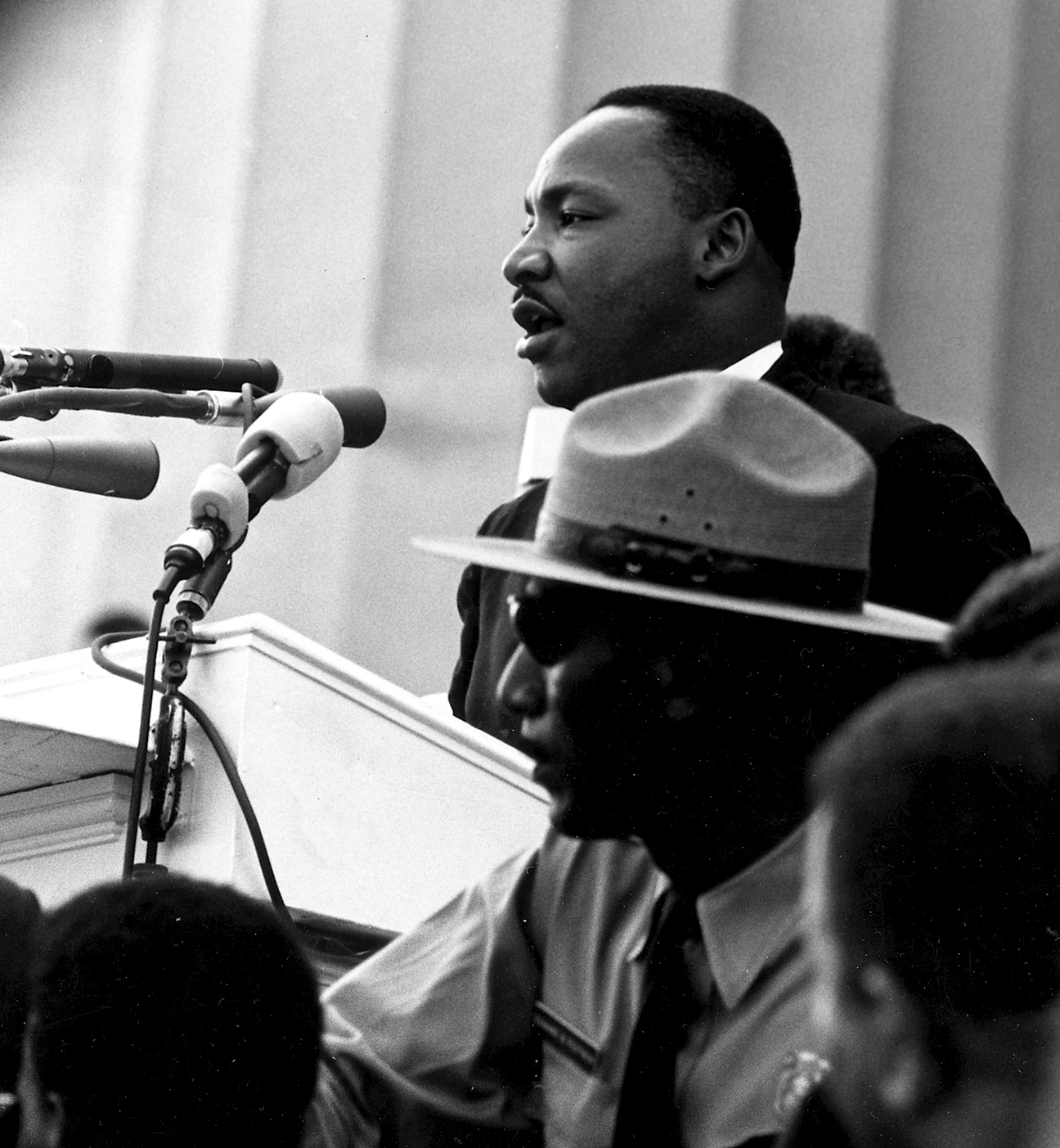
King is renown for his role in the civil rights movement, commitment
to nonviolence, prophecies of radical justice, and martyrdom. The text of his
life, words, and image is an immediately recognizable symbol of resistance to
oppression.
However, as such a powerful text, King has become an irresistible attraction for institutional appropriation. Despite the strident social critique embodied in his life’s work, despite being extremely divisive
and unpopular while alive, Dr. King-as-icon has been incorporated into the metanarrative of “liberty and justice for all,” a symbol of the greatness of
the USA, the nation of freedom.
The University of Maine is one institution where this
appropriation of King-as-text is visible. The Dr. Martin Luther King, Jr. & Corretta Scott King Memorial Plaza
ostensibly honors King and his wife; text from their letters and public
addresses are mounted in a space aesthetically reminiscent of the Capitol Mall.
The signification of this plaza is fairly clear: the memory of Dr. King is to
be honored, and we must remain vigilant for the cause of justice.

But if this memorial is conceived as a production rather
than a product, a site not of stable meaning but of a text at work, what can it
be read to say? The work of the text is “that radical work (which leaves nothing intact)”—dangerous work to engage in when the signification is such a
potent cultural trope, but work that is always already in process.
The memorial’s texts are ‘sanitized’ and physically
marginalized, on the periphery of a walkway; hard granite benches
discourage loitering, accomplishing at once the ‘celebration’ and effacement
of the texts. The ‘memorialization’ of Dr. King and his words imply that
justice has already been accomplished, that it is a triumph to celebrate rather
than a work in which to currently engage.

The selective gaps are telling, decontextualizing the words
of a radical and divisive figure to render them palatable and inoffensive, a
cause neither for reaction nor even observation. In the memorial you will find
no mention of the Reverend, the
struggle for African-American Civil Rights, or King’s death by assassination. Predicated
on a general public knowledge of the subject, this serves to neutralize King,
coopting him for a bland sentiment with no historical or material specificity.

The work of the text of the memorial is a reinforcement of
complacency; we learn from a plaque that “University of Maine students, faculty
and staff stand in opposition to violence, oppression, indifference and all
forms of injustice in our society.” Rather than suggesting that individuals must
daily take a stand against injustice by opposing institutionalized violence,
oppression, and indifference, the memorial suggests that the institution itself
is a guarantor of freedom, thus removing the responsibility for vigilance from
the individual. The text of the memorial as a whole works to directly
contravene a statement of Dr. King’s contained within it: “Freedom is never
voluntarily given by the oppressor; it must be demanded by the oppressed.”




No comments:
Post a Comment